
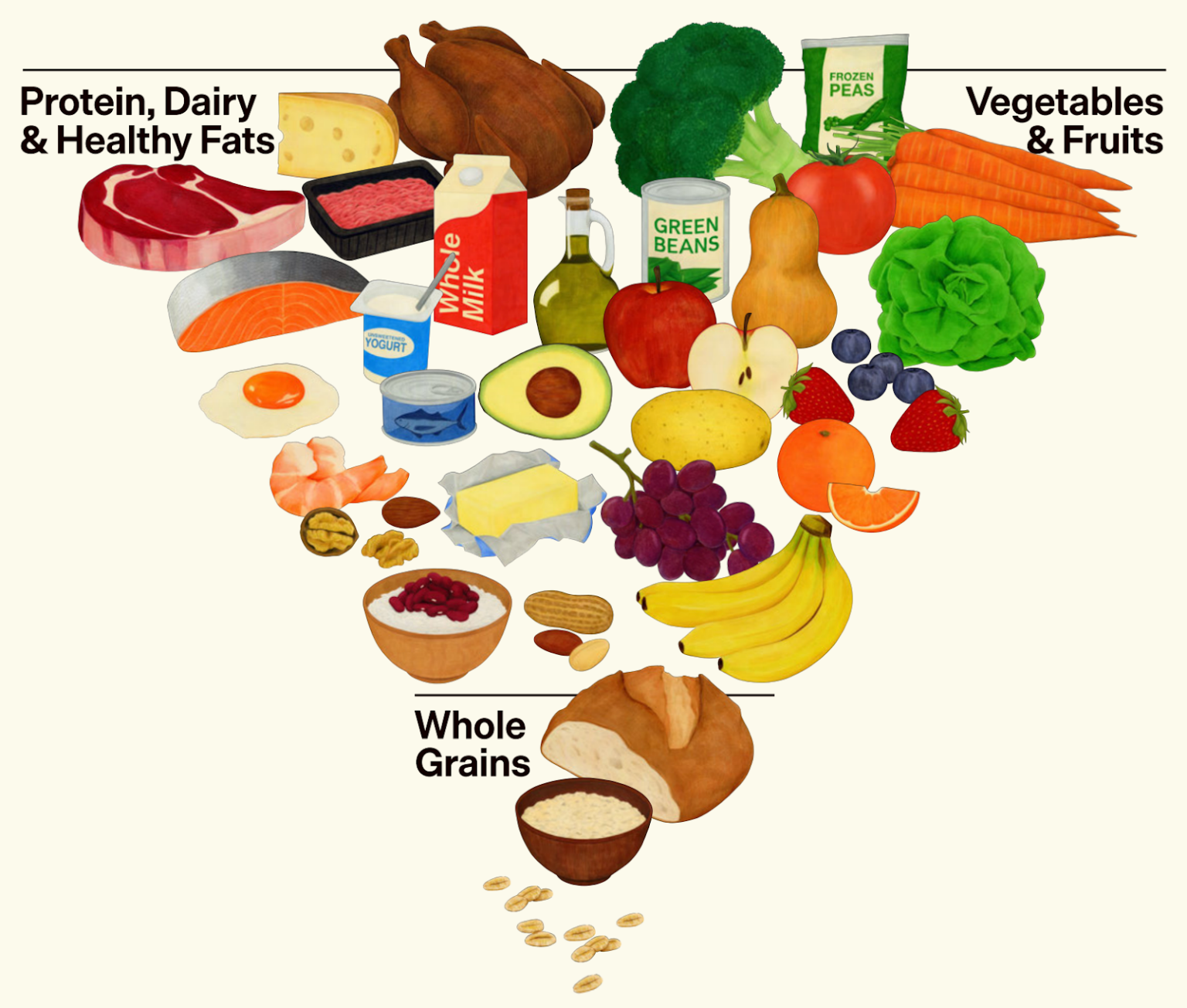
There is so much to say about the revised Dietary Guidelines – among them, that the USDA has a long history of kowtowing to serve industry interests. Bravo on decrying added sugar and ultra-processed foods (although are we to believe this from an administration that “Runs on Dunkin,” soda, and McDonald’s)? But the elevation of red meat to the top of the pyramid is concerning.
Red meat consumption has long been one of the few areas where both conventional medicine and alternative have agreed; for instance, the connection between red meat consumption and colorectal cancer was once on the home page of the American Cancer Society’s webpage.
When the two, sometimes, oppositional sides of healthcare agree on something, it’s time to listen.
There is a trend nowadays to promote the consumption of red meat and increase overall protein among functional nutrition practitioners, many of whom I respect deeply. The caveat is the quality of that meat. Here again, is something about which the USDA has a long history of failing to describe, and it can be everything.
A moderate consumption of organic, grass fed, pastured meat may offer nutritional and health benefits. As these products are unfamiliar and unaffordable for most Americans, my fear is that the average person will take the new guidelines to mean they should chow down on hamburgers made from conventionally processed ground beef or from fast food establishments.
Even a “good” cut of steak that has been industrially raised and slaughtered carries a host of nutritional and health risks, including cardiovascular and colorectal disease and diabetes1. And this is seen even at “moderate” doses2.
Guess what studies define as “moderate” consumption? 100 g – or 3 ½ ounces2.
Who eats only 3 ½ ounces of steak?
What about Chicken Breast?
Have you noticed the size of a chicken breast these days? Chickens are roughly four times heftier than they were in the 1950’s, growing an abnormal amount of breast muscle.
What does this mean for the chicken? Lameness and heart failure often result from the bird’s inability to support its voluptuous size. Feed and growing conditions effect the fat content of the meat; while this is complicated, it seems that free-range chickens may have the best lipid profile. Overall, it’s just not as good as we previously thought, with conventional feeding and selective breeding practices thought to play a role. A blog from the Physician’s Committee for Responsible Medicine indicates that a typical serving of chicken is approximately 50% fat, and 30% of that is the heart-damaging saturated kind.
In other words, when it comes to fat, today’s chicken may not be much better than red meat. An experiment comparing consumption of each showed that they both raised LDL (“bad”) cholesterol. Of course, there’s also a wide spectrum of definition when we say “red meat,” with a vast difference between organic, grass-fed red meat, grocery store brand ground chuck, and whatever it is they claim is beef from fast food establishments.
Quality is Everything
“Eat less, move more” still remains simple, sage advice. But counting calories is so last year. More and more studies have confirmed that the composition of your diet, whether it comes from foods like potato chips, potatoes, and sugar-sweetened beverages versus healthy produce, fats, and whole grains, makes the difference in weight loss or gain (as well as every other health biomarker) in calorically equal diets. (Note: potatoes are healthy; how you prepare them may not be).
You are what you eat: eat quality foods and enjoy quality health. Eat junk, and, well. . .
Ignoring quality in the dietary recommendations is misleading, to say the least. The result may be a very sick, obese, diabetic population getting sicker—unless you’re wealthy.
If you’re not rich, brown rice and beans do a body good. And a well-composed, mostly (or strictly) plant-forward diet, if that’s your choice, can provide all the protein you need. And it will do it without the undo stress on your kidneys that an ultra-high-protein, meat-forward diet will cause (a deeper subject).
Maybe it’s a good thing that there is a long history of Americans ignoring the Dietary Guidelines.
References:
- Shi W, Huang X, Schooling CM, Zhao JV. Red meat consumption, cardiovascular diseases, and diabetes: a systematic review and meta-analysis. Eur Heart J. 2023 Jul 21;44(28):2626-2635. doi: 10.1093/eurheartj/ehad336. PMID: 37264855.
- Zhang X, Liang S, Chen X, et al. Red/processed meat consumption and non-cancer-related outcomes in humans: umbrella review. British Journal of Nutrition. 2023;130(3):484-494. doi:10.1017/S0007114522003415